

The words below were originally made available in June of 2019 exclusively for our patrons as we launched the SongNotes From the Birds monthly subscription series. This year we are revisiting the same theme and bringing the full articles and song recordings to our general audience.
It has been profound, in light of the drastic events of these past few months, to go through this series and see just how timely the thoughts are, even though Coronavirus and the Minneapolis lock-down were nowhere in our imagination when we originally published them.
We hope you are blessed by today’s continued musings about water…
“Fountain of Blessings”
first published via email on 6/22/2019, by Naomi Bird
So far in our series this month, with the overarching theme of water, we have looked at songs that explore fear, the cycles of love, and the unimaginable path that slaves lived.
Songs that center on the theme of the naturally flowing rhythm of bodies of water have a special flavor to them. However, this week, rather than nature’s lakes and rivers, consider a fountain.

“Come Thou Fount of Every Blessing” is a versatile hymn that can seem perfectly appropriate throughout the seasons. It has a fun lilt in the melody and layers to its lyrics that make it both simple and complex, timeless and current.
Gather some coins, and travel with us for a few moments as we gaze into some reflections from this wellspring of musical richness.

The words were written by one Robert Robinson of England, born in September of 1735. In 1770 he began publishing a variety of written works ranging from sermon translations to treatises to history books. In one of his collections was found the text of “Come, Thou Fount of Every Blessing.”
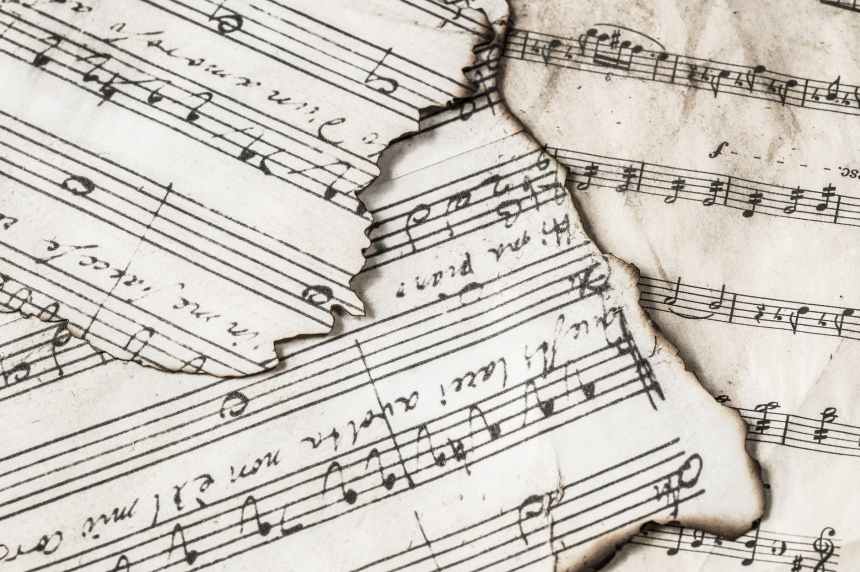
The tune, referred to in hymnody as “Nettleton,” is a mystery in its origin. Earliest records of it date to the early 1800s when it appeared in hymn collections, but the original composer is unknown.
This arrangement is by Mark Hayes. He treats the tune with a unique twist. The meter alternates between 5/4, 4/4, and 6/4, with one solitary occurrence of 2/4.
What does this mean? It means that it has a somewhat unpredictable flow that is simultaneously deliberate and flippant.

It has a more danceable feel than the original, even though it lacks the consistency of rhythm required for dancing. In a way, it reminds me of the constant, but sometimes choppy, flow of a fountain.

According to my pal Wikipedia, fountains were originally created solely for the practical water-required functions of cleaning and hydrating.

With the development of indoor plumbing in the 19th century, public fountains became purely decorative. Prior to that, “most fountains operated by gravity, and needed a source of water higher than the fountain, such as a reservoir or aqueduct, to make the water flow or jet into the air.”


“…needed a source of water higher than the fountain.”
I don’t usually think about this for a fountain, thanks to modern technology.
Honestly, I don’t often think about the source of pretty much everything I use and see throughout a day.

In Ann Voskamp’s book One Thousand Gifts she offers the challenge to make a list of the gifts we receive throughout a day – anything from rays of sunlight to sticky toddler kisses to dirty dishes.
Yes, even dirty dishes.

They are, after all, dishes used to serve food to our people, and we probably get to wash them with running water in the sink in our house with a roof.
All are gifts.
Making a list of “blessings” or making a “gratitude list” is one way of doing this, but when I think of the term “gift” my thoughts are pulled toward the question, “from whom?”

Our blessings have a source. Each day is filled with gifts.
A fountain has a source from which the water flows.

Throughout all the verses of “Come, Thou Fount,” (see below for full text) Robinson draws arrows from the gifts to the Giver, from the gifted to the Gifter, continuously tying us to our source and purpose.
Our blessings can come in the form of art, mercy, music, and love.
Our treasures appear through the help of a friend, simple fun, safety, and security.
Our daily graces of goodness from above are like stamps, signatures, autographs from God, saying, “From God, your higher source of thirst-quenching and life-cleansing springs. I am not purely decorative. You’re welcome.”

May we see more of the blessings around us today, and then look up, to their Source, with songs of loudest praise.
(click below to play our recording)
TEXT for “Come, Thou Fount of Every Blessing”
by Robert Robinson (1735-1790)Come, Thou Fount of ev’ry blessing, tune my heart to sing Thy grace;
Streams of mercy, never ceasing, call for songs of loudest praise.
Teach me some melodious sonnet, sung by flaming tongues above;
Praise His name – I’m fixed upon it – name of God’s redeeming love.Hitherto Thy love hast blest me; Thou has brought me to this place;
And I know Thy hand will bring me safely home by Thy good grace.
Jesus sought me when a stranger, wand’ring from the fold of God;
He, to rescue me from danger, bought me with His precious blood.O to grace how great a debtor daily I’m constrained to be!
Let Thy goodness, like a fetter, bind my wand’ring heart to Thee:
Prone to wander, Lord, I feel it, prone to leave the God I love;
Here’s my heart, O, take and seal it; Seal it for Thy courts above.
ADDITIONAL SOURCES
https://en.wikipedia.org/wiki/Come_Thou_Fount_of_Every_Blessing
https://hymnary.org/person/Robinson_R
https://hymnary.org/text/come_thou_fount_of_every_blessing

The complete June collection is now available for individual purchase.
https://songnotes.nathanbird.com/getjune2019

